Quarterly Update - 2026 Q1 - Taking Care
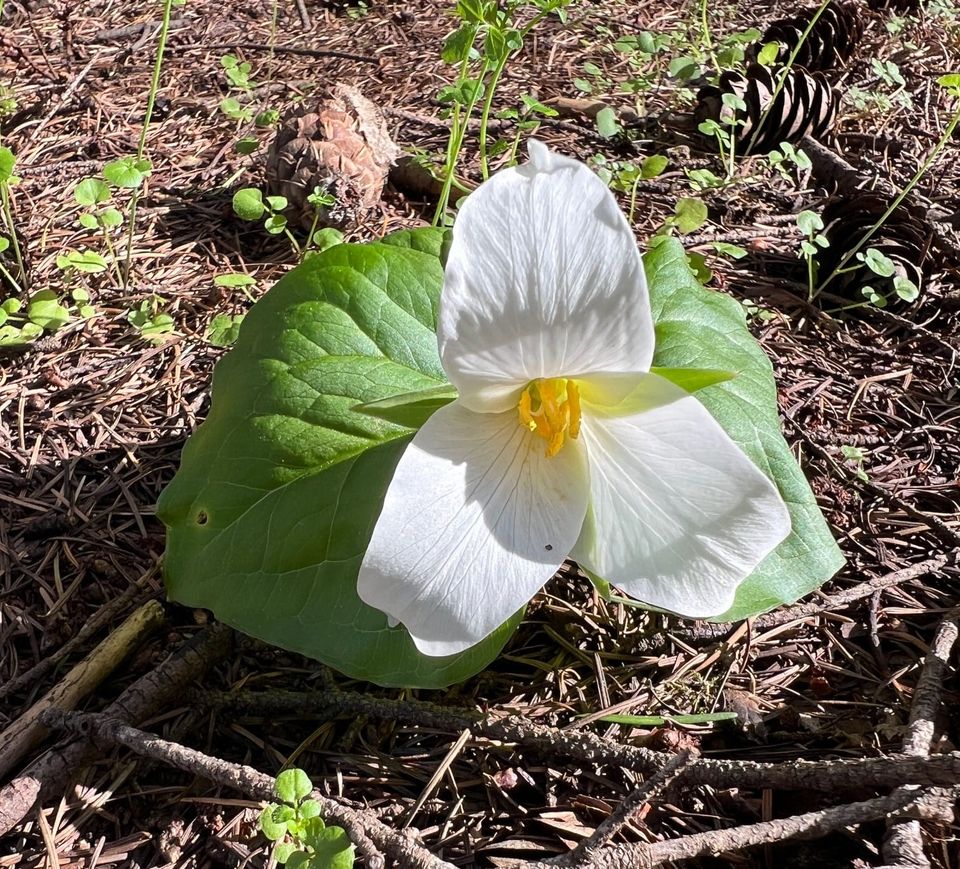
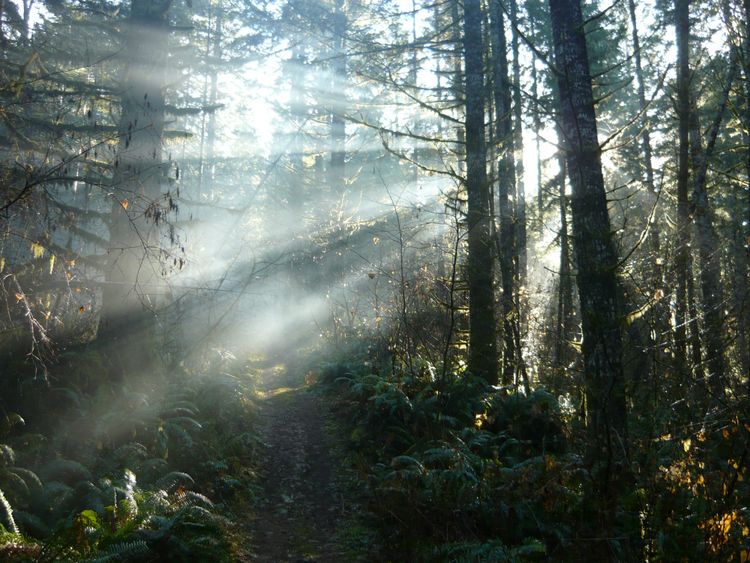
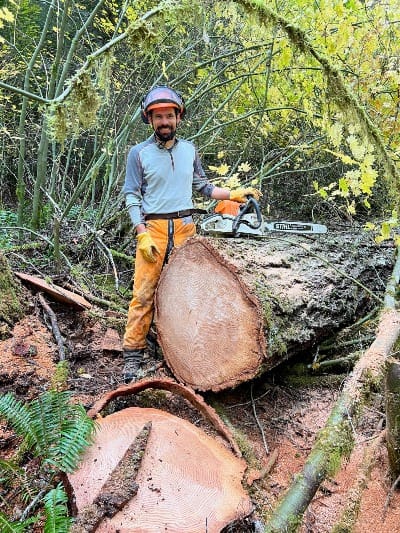
The steady, driving February rain ponds down on my helmet. The tenacious roar of the saw in my wet hands drowns out the sound of the rain. I’m surrounded by the forest – sleeping deeply through the seemingly lifeless depths of another winter. Downed wood rots, fallen leaves crumble and decay, no birds sing. In the course of every winter, at least one major wind event rearranges parts of the forest, blowing down and breaking off trees, exposing tipped up root wads. This round of high energy weather, like most others, is accompanied by heavy precipitation which loosens the soil and increases the blow downs. Time has taught us to expect and treat these events and the related work as just a normal part of our annual round of taking care duties. As soon as the high winds move on, we discover more than a dozen trees down and blocking the forest’s main road. With our forest caretaker blocked in by the fallen trees, and needing to make a meeting in town, there is some urgency to get the logs cut and moved. With diameters ranging from twelve to twenty six inches, this will require time and energy. This needs to happen. With the big saw up and running, cutting round after round, before long I feel the cold rain finding its way through my rain gear and down my back. The other feeling in my back is pain resulting in an earlier injury from doing work that was once fine and easy but has become increasingly challenging. Moving from the first log on to the next, I counsel myself “yes, get the work done, but try not to do any more damage”. So far, so good. Balancing taking care of both the forest and myself.
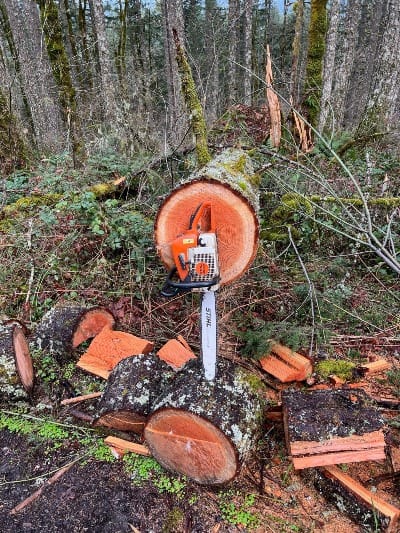
Working my way around the curve and farther into the forest, I notice something that is surprising and unique about the pattern of the fallen trees. In contrast to my experience-informed assumption that the winds of winter storms always come from the south and impact predictable, exposed parts of the forest, I notice two patterns. The trees I am clearing we all blown down by a north wind and they are all concentrated in a limited and relatively protected part of the forest, where blow downs are rare. I appreciate the reminder that no matter how long I have known and worked in this forest, there are always new surprises waiting to be noticed.
I am fortunate to have cut out and rolled the final road blocking tree just ahead of running out of saw gas, reserves of personal energy and the end of the light of this mid winter’s day. I drive up the now cleared road, peering through the continuous rain being push aside by the hard working wipers. Driving to the forest’s high point, on an non essential spur road leading to our cabin, I discover one, final blown over tree, partially blocking the road. Accepting that I’m spent, it’s clear that my capacity for taking care is finished for this day. This one will just have to wait.
A week later, with the rains passed and personal batteries recharged, I return to cut and move the final tree. Rounding the corner, I find a surprise. The downed tree has been cleanly bucked up and the tangle of limbs and tops are carefully piled. But how can this be? Years of experience have taught me that “if I don’t do it, it’s not getting done”. This welcome disjoint between expectations and realities reminds me that we have crossed the line from one chapter of forest leadership into the next. Our son, recently returned from distant travels and gladly accepting forest leadership, followed in my road clearing tracks, spotted where taking care was needed and took care of it. Just as the forest is an interconnected and interdependent web of relationships, our family is as well. Adapting and flexing as changing conditions demand.
Reflecting on the tasks that brought be to this part of the forest on this day, I am aware of a second transition in the life cycles of this forest. I’ve come to tend to the job of helping get our sawmilling equipment through the cold, wet days of winter by firing up reluctant diesel engines and recharging starting batteries. Why am I taking on this form of taking care, which normally falls to our son? Because he and his wife are at home finding their way through another taking care adventure, helping their newborn son through his first week. I like the feeling that though I have recently and rightly handed off many responsibilities, I can still be helpful as care taking work is flexibly passed around from one generation to the next and, occasionally, back again. Mid-February finds me planting pine seedlings. Driving the shovel into the moist soil, pulling back to open a slit into which the roots are slid, I wonder about what lies ahead for our pair of grandson cousins born just four days apart. A sense of responsibility to “those yet unborn” has guided and driven our forest restoration work for decades, but now the theoretical has been made real by the once unborn now being at home in the crook of a parent’s arm – no longer unborn but being so here!

Freshly cut logs are decked beside the sawmill, ready to be milled into beams for the rebuilding of a portion of the new arrival’s home. They came from trees that were already twenty years old when I was a newborn seventy winters back. How big might the freshly planted pines be when the newborn lads are my age? How might this forest and these lads take care of one another?
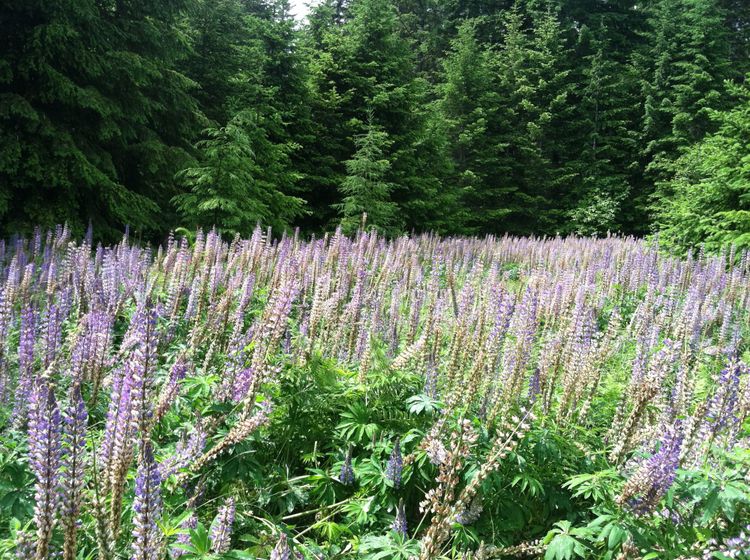
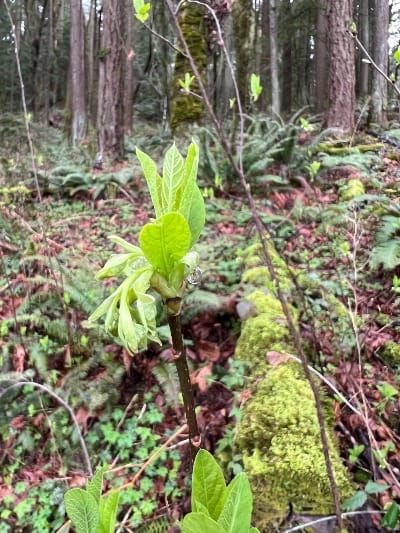
Writing these words shortly after the spring equinox, I see through the window how rapidly and forcefully new life is roaring back into the forest. What a contrast to the apparently lifeless forest of early February in which I wrestled saturated rounds of logs out of the road. Surrounded by new life that is as energetic as the tree leveling storm, I see and sense unfurling leaves growing bigger with each day, frogs and birds filling the air with their necessary calls, egg clusters of frogs and salamanders clinging to branches below the pond’s surface, salmon fry wiggling up out of the gravels, the familiar hums of bumble bees and humming birds and the calls of long migrating cranes, geese and swans overhead. The sense of weight and worry I have felt over the past year as our country and world become more unhinged and troubled with each passing day is made lighter by the inescapable feeling of the forest as a nursery bursting with new, beautiful and uplifting life.
Given all of this, it feels inappropriate and hardly necessary to end with my customary question of “what’s there to love in these forests?”, but, why not?
In these times when uplifting is so important, I am uplifted by:
- The reminders that surprises and mystery await all of us who make and take the time to pay attention to the forest and to ask “what does this place have to teach us?”.
- I, as part of these forests, can look forward to being uplifted by spring’s surge of new life. Just as the forest is reborn each spring, I too can’t help being reborn as well, even when cold rain trickles down my sore, old back.
- Our lives are intertwined with so many types of cycles – made ever more poignant this winter by welcoming new family members and logically handing off responsibilities and roles from one generation into the willing and capable hands of the next.
Instead of signing off with the customary and deary news of ever rising Co2 levels, I invite you to carry these words in your good hearts:
“Even a wounded world is feeding us. Even a wounded world holds us, giving us moments of wonder and joy. I choose joy over despair. Not because I have my head in the sand, but because joy is what the earth gives me daily and I must return the gift.”
- Robin Wall Kimmerer
Thank you for reading and for all that you do!